
The Ride for Redress and the Federal Government Apology
Houaida Bouslimi, Feb 2026
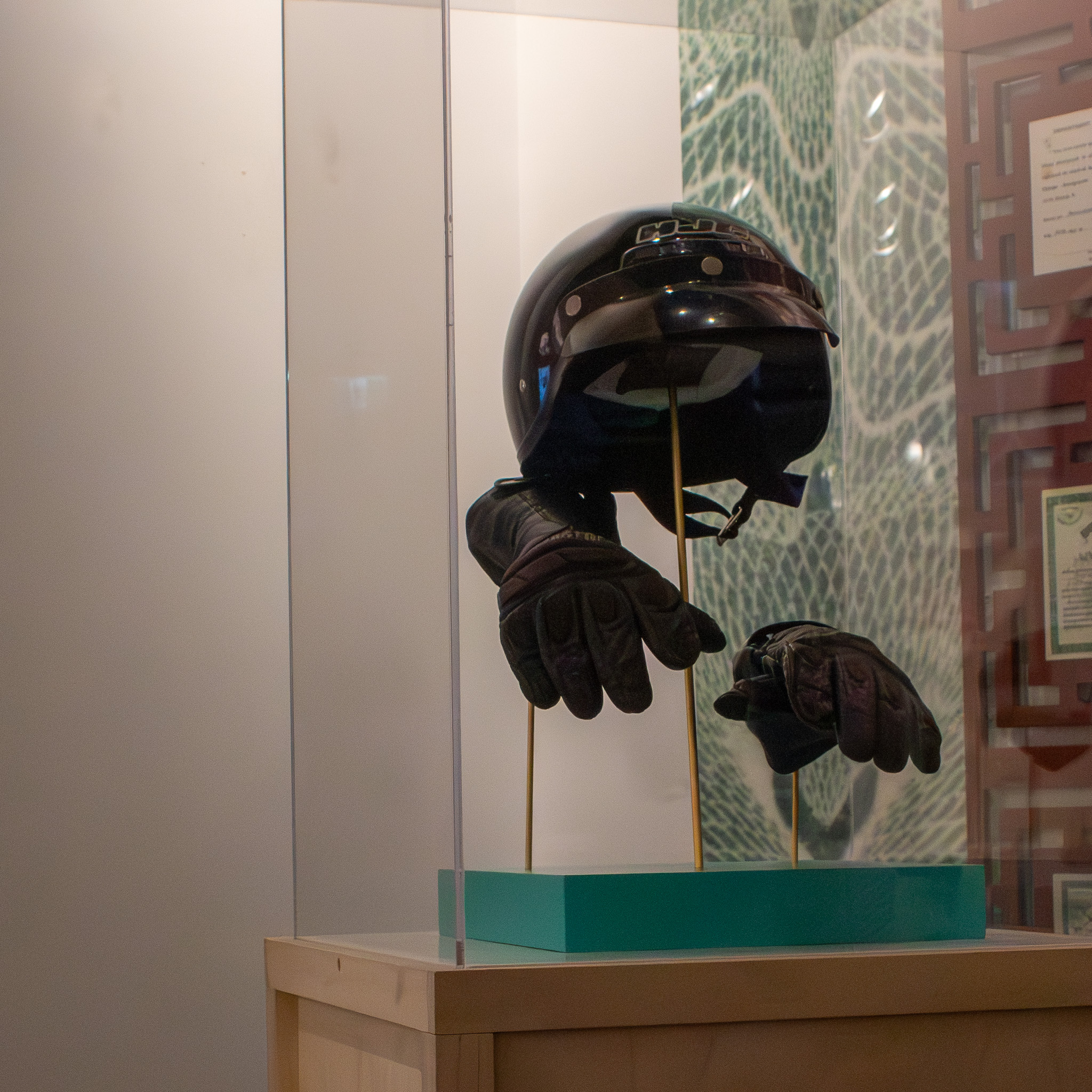
Gim Wong's gloves and motorcycle helmet are part of the travelling exhibition, Seat at the Table: Chinese Immigration and British Columbia.
One motorcycle. One journey. One demand for justice.
In 2005, Gim Foon Wong, a Chinese Canadian Second World War veteran, set out from Victoria on a solo motorcycle ride across Canada. His destination was Ottawa. His purpose was redress. The Ride for Redress called on the federal government to formally acknowledge and apologize for the Chinese head tax and the Chinese Immigration Act of 1923, policies that excluded Chinese families, denied reunification, and caused generations of harm.
Wong's ride carried more than miles; it carried memory. Along the way, he drew attention to long-ignored stories of families separated for decades, lives shaped by surveillance and exclusion, and veterans who fought for a country that denied them full belonging.
Though he was prevented from speaking to the Prime Minister in Ottawa, the message of Gim Wong's ride travelled far beyond him. The Ride for Redress became a catalyst. It energized national conversations, strengthened community advocacy, and helped turn decades of organizing into visible public action.
In 2006, the federal government issued a formal apology in the House of Commons. The apology acknowledged the injustice of exclusionary laws, and provided compensation for surviving headtax payers and their spouses, as well as funding for community education and commemorative initiatives.
The Ride for Redress tells us that apologies are not inevitable. They are earned through persistence, courage, and collective memory. Wong's journey stands as a powerful example of how individual action can help reshape public history and bring long-overdue recognition to past injustice.