
EXPLORE CANADA’S OLDEST CHINATOWN
Explore
explore chinatown
The history of Victoria’s Chinatown is deeply embedded in the history of British Columbia. Our ancestors came here from China with nothing. They had to work hard, prove themselves, and create a lifestyle that integrated two cultures.
Victoria’s Chinatown is the oldest surviving Chinatown in Canada, and the only one in North America to retain its 19th century townscape. The buildings still have their picturesque arcades, narrow alleys, and enclosed courtyards. In 1995, Canada’s Historic Sites and Monuments Board designated Victoria’s Chinatown a site of national and architectural significance.
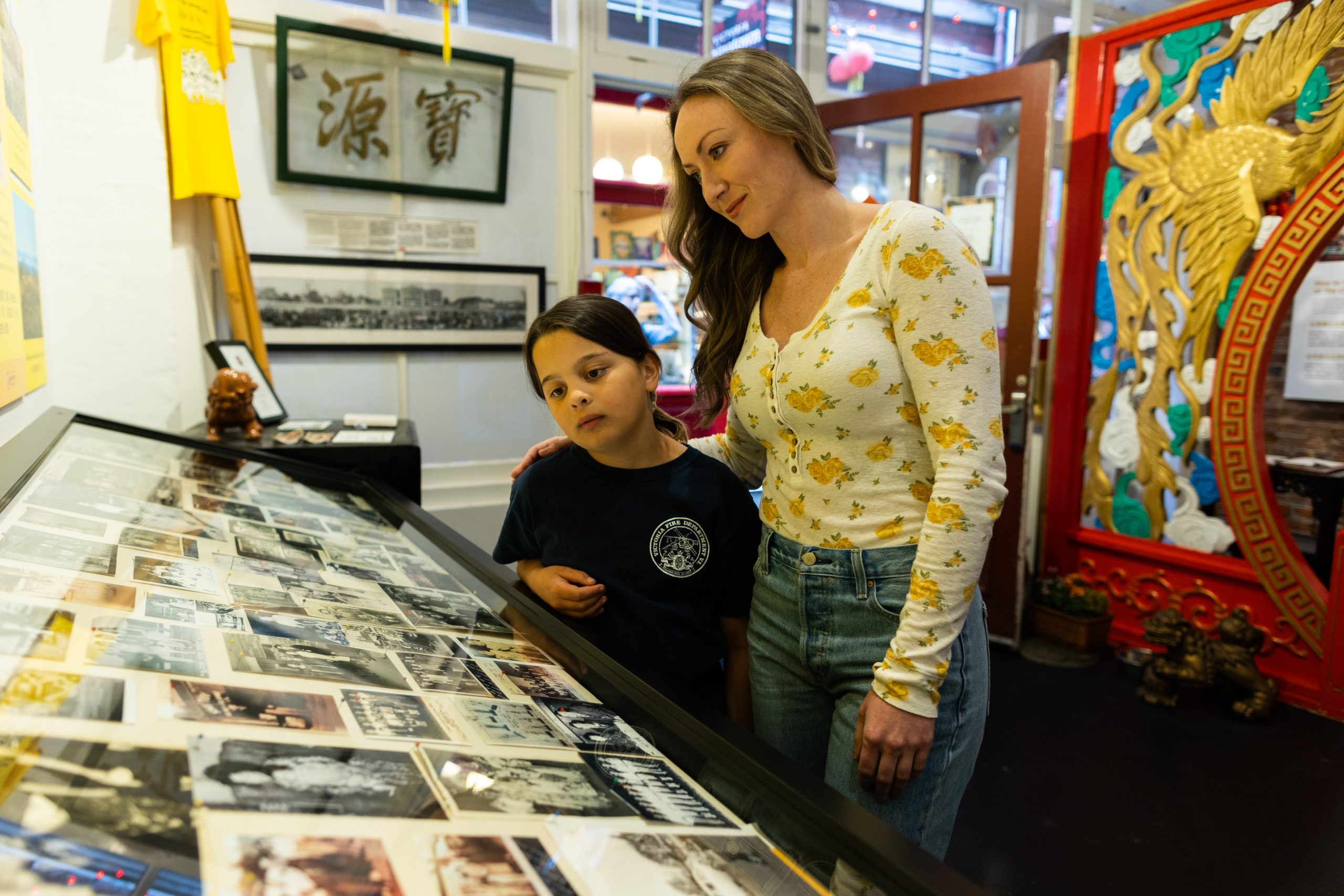
Current Exhibits
Welcome to the Museum
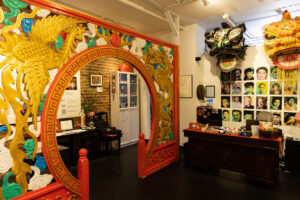
Lions and archway
As you enter the Victoria Chinatown Museum, you will be welcomed by the suspended lion heads and colourful archway. The archway once belonged to Ming’s Restaurant, a long-standing social hub in downtown Victoria, where food, celebration, and community life came together.
The lion heads are ceremonial objects, used over many years in lion dances by Victoria’s Wong Sheung Kung Fu Club. Constructed from layered materials, fabric, paint, and decorative elements, they were designed for performance and movement. At festivals and on special occasions, dancers animated the lions with rhythm and coordination, their expressive features and bold colours energizing shared spaces while bringing energy and blessings.
The archway below the lion heads reflects Chinese architectural traditions that use decorative framing to mark thresholds. Such structures often signal welcome, protection, and transition, moving from the street to the interior, from everyday activity into communal space.
Placed at the museum entrance today, these elements create a meaningful continuity between past and present, inviting visitors to enter and experience the stories within.
Safe from Don Mee Restaurant
Standing on your right as you enter the museum, this safe once belonged to Don Mee Yuen Kee Co., a long-standing Chinese restaurant in Victoria’s Chinatown. Its solid weight and worn surface speak to years of daily use—opening and closing, counting receipts, and securing what mattered at the end of each day.
For Chinese-owned businesses, a safe was more than storage. It protected earnings, records, and responsibilities in a time when security and self-reliance were essential. Quiet and unassuming, it supported the visible life of the restaurant while remaining largely unseen by diners.
Time has left its marks here. The scuffed metal, working dial, and sturdy hinges tell a story of repetition and care. Today, the exhibit invites visitors to turn the combination, open the door, and sign the book—transforming a once-private routine into a shared experience.
Moment of reflection
- How did elements of Chinese performance, decoration, and architecture help to shape social life in Chinatown?
- How is cultural expression woven into everyday places, such as restaurants and public celebrations?

A Little Bit Sweet: Confections, Culture and Community
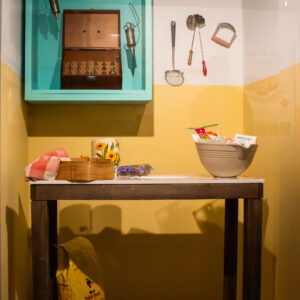
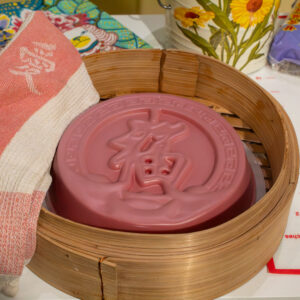
A Little Bit Sweet: Confections, Culture and Community
As you enter this exhibit, you encounter more than desserts. You encounter stories of family, adaptation, and belonging told through food.
For Chinese Canadian families in Victoria, sweets are not only treats—they are part of everyday life and cultural memory. Recipes travel across oceans and generations, changing over time while preserving connection. Some desserts come from long-standing traditions in China, while others emerge from encounters with Canadian ingredients, technologies, and cultures.
Western-style cakes, or sai béng, became popular in Hong Kong and Chinatowns worldwide as Chinese bakers adapted European techniques and local tastes. In Victoria, families like that of Chin Nee Young embraced decorated cakes and pastry traditions that blended Chinese and Western styles. His tools, cake tips, and decorating kit reflect the care and craftsmanship behind each creation. For his family, baking was not only work, but part of daily life—cookies, cakes, and memories shared around the kitchen table.
Other sweets tell stories of migration and continuity. Tapioca cake, or chin chéng go, carries symbolic meaning: its many layers represent prosperity and good fortune. Sesame balls (jin deui) are crisp on the outside and soft within, connecting generations through shared preparation and celebration. Rose cookies (jah fa) reflect cultural exchange across continents, shaped by Chinese, Indian, and European traditions. For one family, bringing these cookies to school transformed moments of exclusion into acceptance, showing how food can soften barriers and create connection.
Everyday objects in the exhibit—mixing bowls, molds, flour, and handwritten recipes—reveal the work behind these traditions. These tools supported both home kitchens and family businesses, where baking provided income, stability, and creative expression.
This exhibit invites you to consider how something as simple as a sweet can carry stories of migration, resilience, adaptation, and care. Through baking, families preserve traditions strengthen community in Victoria’s Chinatown.
Reflect & Connect
• What foods connect you to your own family, culture, or memories?
• How can food help people feel accepted, welcomed, or understood?
• What stories might be hidden behind everyday objects in a kitchen?
• How do traditions change while still preserving connection across generations?
We are proud to showcase this inaugural exhibit curated by a team from the Victoria Chinatown Museum Society. The exhibit was generously sponsored by the Doane Grant Thornton Foundation.


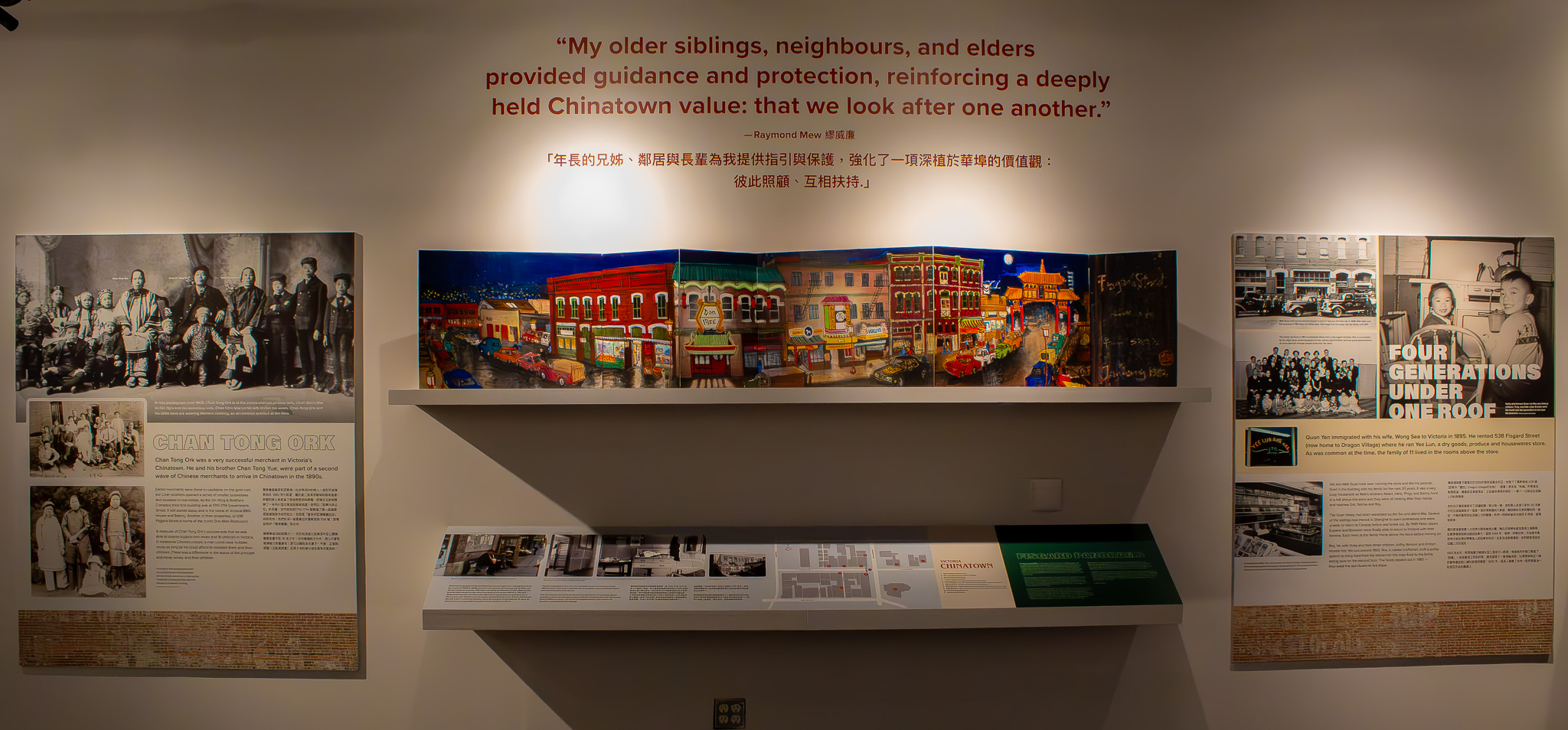
If These Walls Could Talk 舊牆留聲
As we walk through Victoria’s Chinatown, we see only what exists today. However, these buildings have stood for decades and each holds multiple stories within its walls. The architecture tells us about the origins of the owners and their aspirations in Victoria, while the businesses that operated in these spaces have been vital to the region’s economic and social development.
Beyond the architecture and commercial history, the personal narratives of families provide a window into the daily lives of those who once lived in these buildings—offering a glimpse into the past and weaving together the rich tapestry of Chinatown’s legacy.
“This exhibit not only celebrates the history of Chinatown, but also highlights the dedication and collaborative spirit of our community,” says VCMS Board Chair Dr. Grace Wong Sneddon. “We are grateful for the contributions of community members who made this exhibit possible by generously sharing their family stories. We invite everyone to join us in exploring the many layers of Chinatown’s legacy.”
“If These Walls Could Talk: Exploring Chinatown’s Stories 舊牆留聲“ marks a significant milestone as it is the first exhibit curated by museum staff and board members. The exhibit will run until spring 2027.

Events
If These Walls Could Talk: Exploring Chinatown’s Stories 舊牆留聲
As we walk through Victoria's Chinatown, we see only what exists today. However, these buildings have stood for decades and each holds multiple stories within its walls. The architecture tells […]
Victoria, British Columbia V8W1W3 Canada
Awakening Chinatown 2026
The Fifth Annual Awakening Chinatown ReturnsThe streets of Canada’s oldest Chinatown will come alive once again as the fifth annual Awakening Chinatown Festival returns on Sunday, May 31, 2026. Presented […]
Looking Back
Past Exhibits
The Magic of Tony Eng
The Magic of Tony Eng exhibit was a favourite of visitors and volunteers. Tony Eng, magician extraordinaire, touched the lives of Victoria’s many communities. He was a mentor, teacher and […]
Victoria, BC Canada
Peering into the Past
Creating innovative ‘living museum’ spaces in Chinatown Chinatowns, located throughout the Americas and other continents, are important sites of tangible and intangible cultural heritage. Today, they face myriad changes and […]
A Seat at the Table: Chinese Immigration and British Columbia
This award-winning exhibition explored historical and contemporary stories of Chinese Canadians in BC and their struggles for belonging. Using food and restaurant culture as an entry point, the stories in […]
Victoria, British Columbia V8W1W3 Canada
Victoria in the Time of Exclusion
The Victoria in the Time of Exclusion exhibit examines a period in Canadian history when Chinese immigrants and Chinese Canadians were subjected to systemic discrimination through federal immigration law. At the centre […]
Past Events
Commemorative Fundraising Luncheon of the Chinese Students School Strike
Address for the Victoria Chinatown Museum Society on the Occasion of the 100th Anniversary of the Chinese Students Strike, September 5, 2022 Timothy J. Stanley, PhD | Professor Emeritus Faculty […]
Victoria, BC Canada
Dragon Boat Festival at the Museum
In partnership with Dragon Boat BC, this exhibit featured two dragon boat heads that were used at Expo 86, as well as in the first dragon boat races at the 1994 Commonwealth Games in Victoria. This exhibit also featured news articles and medals from past races.
Victoria, British Columbia V8W1W3 Canada
Chinese Canadian students in Victoria boycotted public schools for one year – 1922-1923
Grace Wong Sneddon, Ph.D Vice-Chair, VCMS The boycott was a response to the growing Anglo pro-segregation pressure across the West Coast in the 1920s for a more complete separation of […]
Victoria, BC Canada
International Mahjong Day
International Mahjong Day is August 1st, and we're gearing up for a fun night of Mahjong to celebrate! In collaboration with the Victoria Mahjong Club, we will be hosting International […]
Lunar New Year 2026
Gung hay fat choy! February 17, 2026 is the beginning of the Lunar New Year, the year of the fire horse. The celebration of Lunar New Year holds deep cultural […]
Victoria, British Columbia V8W1W3 Canada
Victoria Royals Hockey Game
If you’ve been thinking about getting out to a game, tonight is a great night to watch the Royals face off against the Wenatchee Wild at Save On Foods Memorial […]
Victoria, BC V8T 4J2 Canada
Lunar New Year at Mayfair Mall
Celebrate the Year of the Horse at Mayfair Mall! Enjoy the Lion Dance by the Wong Sheung Kung Fu Club at 1 p.m. and meet some of our board members […]
Victoria, BC V8Z 6E3 Canada
Lunar New Year Celebration
Lunar New Year's Parade and blessing of merchants, starting at the Gate of Harmonious Interest. Celebrate the Year of the Horse! Presented by the Chinese Consolidated Benevolent Association. Join us […]
International Women’s Day Short Film Screening
Join us March 29 at 1 pm for two short films in honour of International Women's Day: Born an Immigrant – The Dressmaker and In Search of Mah Hang. Stay for a panel […]
Victoria, BC V8R 5L5 Canada
Awakening Chinatown 2026
The Fifth Annual Awakening Chinatown ReturnsThe streets of Canada’s oldest Chinatown will come alive once again as the fifth annual Awakening Chinatown Festival returns on Sunday, May 31, 2026. Presented […]
Get in touch,
get involved
We’d love to hear from you! Whether you’re curious about our museum’s initiatives, interested in becoming a member, or eager to volunteer at upcoming events, please drop us a message below. We’re here to connect you with the stories and heritage of Chinese Canadians in Victoria.
